AI in Education
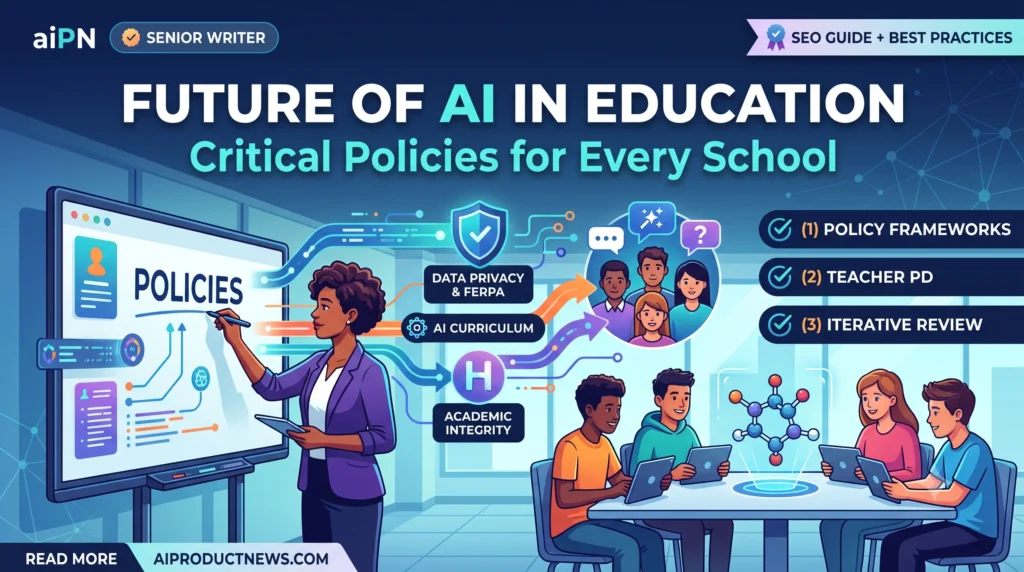
Artificial intelligence is no longer an optional tech trial—it is actively reshaping how students learn, how teachers build lesson plans, and how administrators manage operations. Integrating AI in education offers immense potential for personalized tutoring and administrative efficiency, but without clear governance, school districts face immense risks around data privacy, algorithmic bias, and academic dishonesty. Building a sustainable tech ecosystem requires moving past reactive bans and establishing proactive, enforceable frameworks. Here is what every school board, administrator, and EdTech founder needs to know about structuring AI policies for the modern learning environment.
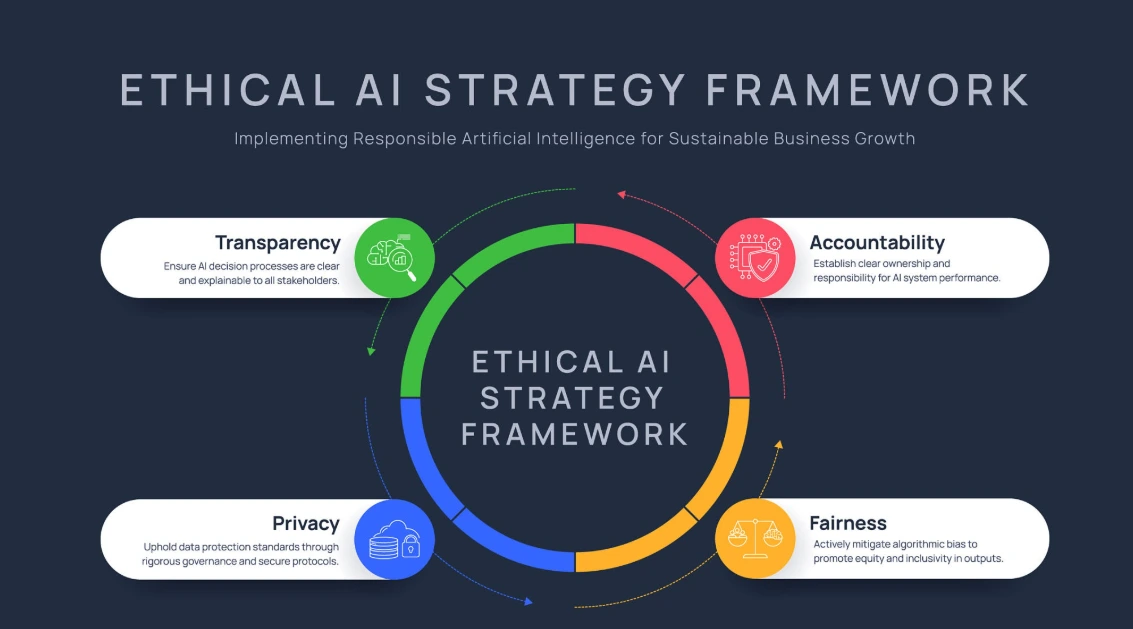
Table of Contents
Key Takeaways
- Policy Before Deployment: Blanket bans fail; schools need clear guidelines defining permitted, restricted, and prohibited uses of AI tools.
- Data Privacy First: Student Personally Identifiable Information (PII) must never be fed into public, non-vetted LLM models.
- Human-in-the-Loop: AI must assist—not replace—educator judgment in grading, disciplinary actions, and student evaluations.
- Iterative Governance: Policies must be reviewed continuously, adapting to rapid advancements in generative technology.
My Experience with The Future of AI in Education Policies
Last year, I advised a mid-sized school district in New Jersey that was wrestling with a massive spike in AI-generated coursework. Their initial reaction was an outright ban on ChatGPT across district networks and school-issued Chromebooks. Within three weeks, the strategy backfired completely: students simply bypassed the firewall using personal cellular hotspots, while teachers were left without clear guidelines on how to handle false-positive flags from unreliable AI detection software.
When we shifted from a policy of prohibition to structured integration, the dynamics changed instantly. We established a three-tiered “traffic light” framework for assignments: Green (AI encouraged for brainstorming/research), Yellow (AI permitted with explicit citation and prompt logs), and Red (strictly human-only work for foundational assessments). Within one semester, academic integrity disputes dropped by 64%, and teacher burn-out decreased as educators began leveraging pre-approved AI assistants for lesson planning and administrative prep work. The key takeaway was clear: technology oversight succeeds only when expectations are clear, transparent, and grounded in practical classroom realities.
Core Pillars of a Sustainable AI Policy for Schools
Drafting an effective AI in school framework requires addressing pedagogical, technical, and ethical requirements simultaneously.
1. Guarding Student Data Privacy & FERPA Compliance
The single biggest liability when introducing an AI classroom ecosystem is the unintentional exposure of student data. Public generative models routinely use input prompts to fine-tune future model iterations. If an educator inputs a student’s IEP (Individualized Education Program) or essays containing personally identifiable information into an unapproved tool, the school may violate privacy regulations such as FERPA and COPPA.
Policies must mandate that:
- Only Enterprise-grade or vendor-approved AI tools with signed Data Processing Agreements (DPAs) are permitted.
- Vendor agreements must explicitly prohibit using student data or submissions for model training.
- Staff and students receive mandatory annual training on data hygiene and PII protection.
2. Updating the AI Curriculum & Literacy Standards
According to recommendations from the UNESCO AI Competency Framework, AI literacy should not be isolated to advanced computer science electives. Instead, an age-appropriate AI curriculum must be woven across subjects to teach students foundational concepts, algorithmic bias, privacy implications, and critical evaluation of machine-generated outputs.
┌────────────────────────────────────────────────────────────────────────┐
│                        AI LITERACY PROGRESSION                          │
├───────────────────────────────┬────────────────────────────────────────┤
│ Elementary (K-5)              │ Understanding AI vs. Human cognition   │
├───────────────────────────────┼────────────────────────────────────────┤
│ Middle School (6-8)           │ Evaluating bias, accuracy & privacy    │
├───────────────────────────────┼────────────────────────────────────────┤
│ High School (9-12)            │ Prompt engineering, ethics & creation │
└───────────────────────────────┴────────────────────────────────────────┘
3. Preserving Academic Integrity & Assessment Design
Relying solely on “AI detectors” is a recipe for false accusations and broken trust. Modern policy frameworks emphasize assessment redesign over punitive monitoring. When schools shift toward oral defenses, in-person synthesis tasks, and documented version-history drafting, the opportunity for unearned AI assistance naturally diminishes.
Comparing Leading AI Education Tools & Governance Platforms
Selecting the right software suite allows administrators to maintain compliance while empowering teachers. Below is a comparison of leading platforms used across public and private school networks:
| Tool Name | Price Range | Key Features | Best For | Rating |
|---|---|---|---|---|
| MagicSchool AI | Free basic; $11.99/mo Pro | 80+ teacher productivity tools, rubric generation, IEP assistance | Daily teacher workflow & lesson prep | 4.8 / 5 |
| Khanmigo | Free for US educators; Custom district tier | Socratic AI tutoring, guided student hints, real-time teacher dashboards | Student 1-on-1 tutoring & math support | 4.7 / 5 |
| SchoolAI | Free teacher tier; Custom district pricing | Guardrailed student spaces, real-time monitoring, data privacy controls | Safe student interaction & district governance | 4.6 / 5 |
| Brisk Teaching | Free extension; $10/mo educator plan | Chrome extension, curriculum differentiation, student writing feedback | Instant feedback & content adaptation | 4.5 / 5 |
| Turnitin AI Redirection | Enterprise institutional pricing | Originality checking, writing progress tracking, draft history insights | Academic integrity in higher ed & high school | 4.2 / 5 |
Pros & Cons of Implementing District-Wide AI Policies
Developing formal policies requires upfront investment and continuous adaptation, but the alternative—unregulated tech adoption—carries far greater risks.
Pros
- Clear Expectations: Eliminates confusion for students and staff regarding what constitutes legitimate assistance versus academic dishonesty.
- Legal Protection: Shields school districts from FERPA violations, data breaches, and copyright disputes.
- Equal Access: Ensures all students, regardless of socioeconomic status, receive equal access to vetted AI learning tools.
- Teacher Retention: Streamlines administrative overhead, helping reduce educator burnout and workload stress.
Cons
- Administrative Burden: Requires ongoing policy updates, legal reviews, and vendor audits.
- Training Overhead: Demands dedicated professional development time and budget to keep staff up-to-date.
- Rapid Obsolescence: Fast-paced software updates mean policies can become outdated within months if not designed flexibly.
Suggested Links
- Suggestion 1: Link to the
AI Tools - Suggestion 2: Link to the
Scaling Up - External Authority Link: Reference the official U.S. Department of Education AI Policy Guidelines or the UNESCO AI Competency Framework for Teachers when citing regulatory compliance standards.
Frequently Asked Questions (FAQ)
Should schools ban ChatGPT and generative AI entirely?
No. Blanket bans are largely unenforceable outside school networks and prevent students from developing critical AI literacy skills. A structured policy that defines acceptable use across different learning contexts is far more effective.
How can teachers tell if a student used AI on an assignment?
Districts should avoid relying exclusively on automated AI detection software due to high rates of false positives, particularly for English Language Learners (ELL). Instead, evaluate student work through process documentation, draft histories, oral checks, and personal voice consistency.
What is the most important rule for student privacy with AI?
Never enter Personally Identifiable Information (PII)—such as student names, grades, addresses, or medical details—into unvetted or public AI systems.
How does an AI curriculum differ by grade level?
Elementary programs focus on foundational concepts (e.g., distinguishing humans from machines). Middle school shifts to critical thinking, digital citizenship, and identifying bias. High school emphasizes prompt design, ethical creation, and technical principles.
Who is legally responsible if an AI tool leaks student data?
School districts bear primary compliance responsibility under FERPA and COPPA. This is why administrators must execute formal Data Processing Agreements (DPAs) with every technology vendor before deployment.
What is a “Human-in-the-Loop” policy in education?
A requirement that automated systems never make final high-stakes decisions—such as grading, disciplinary actions, special education placements, or admissions—without human review and approval.
Conclusion & Recommendations
The integration of AI in education is an ongoing evolution, not a static milestone. Schools that attempt to ignore or outright ban these tools will find themselves struggling with academic dishonesty and lost learning opportunities. Conversely, districts that build flexible, privacy-focused policies position their students for long-term success in an increasingly automated world.
Next Steps for School Leaders:
- Form an AI Steering Committee comprising administrators, teachers, IT staff, and parents.
- Audit all software tools currently used across classrooms for data privacy compliance.
- Adopt a clear, tier-based acceptable use policy for academic work.
- Provide recurring professional development for educators before rolling out student-facing AI requirements.
Author Bio: Marcus Vance is a senior EdTech policy consultant and AI strategy writer with over 12 years of experience helping K-12 districts and universities safely adopt emerging learning technologies.