
Introduction ChatGPT vs Anthropic & Key Takeaways
The generative AI landscape is defined by a fierce rivalry between two heavyweights: OpenAI’s ChatGPT and Anthropic’s Claude. While ChatGPT remains the household pioneer famous for its broad ecosystem, multi-modal versatility, and agentic tools, Anthropic’s Claude has captured the devotion of developers, researchers, and professional writers with its nuanced prose style, massive context windows, and elite coding workflows (via Claude Code and Sonnet 5). Whether you are looking to automate content, analyze complex codebases, or manage deep research, choosing between them depends entirely on your day-to-day workflow.
Key Takeaways
- Core Value Proposition: ChatGPT offers an all-in-one ecosystem with deep search and custom app integration; Claude provides unmatched writing style fidelity, coding safety, and multi-file code execution.
- Performance Stats: Serving hundreds of millions of weekly active users, ChatGPT utilizes flagship reasoning models (like GPT-5.6 Sol), while Claude powers mission-critical software engineering through advanced agents like Sonnet 5.
- Verdict & ROI: Both options start at $20/month for individual professional tiers (Plus vs. Pro), scaling up to $100–$200 for power users. Best for everyday automation (ChatGPT) or long-form technical/creative drafting (Claude).
Table of Contents
What is ChatGPT vs Anthropic Claude?
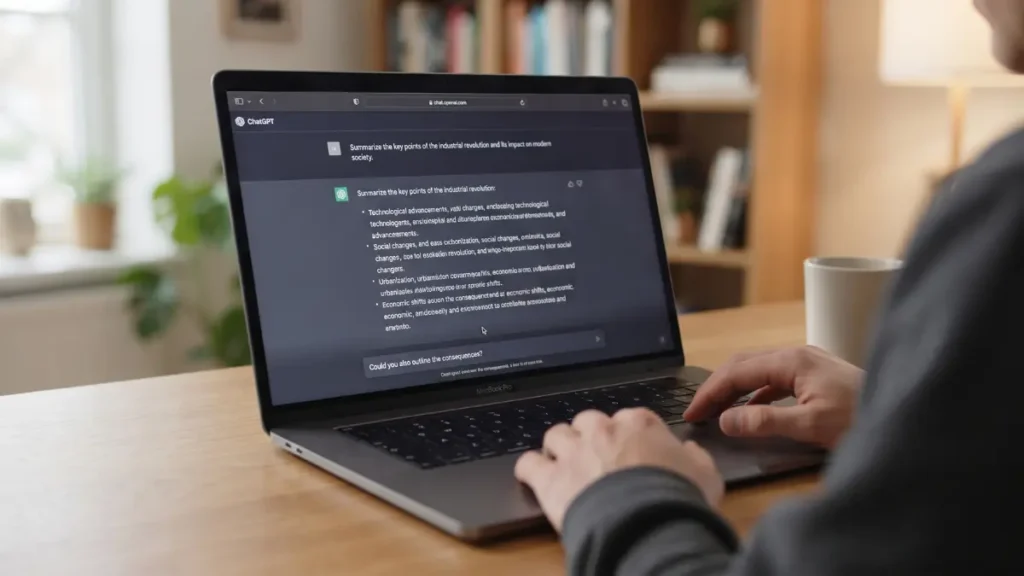
- ChatGPT is OpenAI’s flagship conversational AI platform. Designed for maximum versatility, it supports everything from quick brainstorming and voice interactions to Deep Research and automated website generation (Sites). It is heavily integrated across consumer web apps, mobile tools, and developer APIs.
- Anthropic Claude is an advanced AI assistant built by safety-first pioneer Anthropic. Powered by cutting-edge models like Claude Sonnet 5 and Opus, Claude is engineered for precision, minimal hallucination, deep text ingestion, and sophisticated command-line coding workflows (Claude Code / Cowork). It is trusted by enterprise engineering teams and professional writers worldwide.
Key Features (With Feature Summary Table)
| Module/Feature | Primary Function | Key Benefit |
|---|---|---|
| Deep Reasoning & Effort Levels | Adjustable compute scaling for complex logic | Tailors processing power to the hardness of the prompt |
| Coding & Terminal Agents | Autonomous multi-file project refactoring & CLI | Executes deep software engineering tasks with minimal friction |
| Massive Context & Artifacts | Side-by-side workspace rendering for outputs | Allows users to review, edit, and export code or writing instantly |
| Deep Research & Web UI | Multi-step web crawling and synthesis | Compiles comprehensive reports with verified citations automatically |
1. Advanced Reasoning & Multi-Step Effort 🧠
- What it does: Both platforms let users scale computing power based on the task. ChatGPT implements dynamic reasoning tiers (using GPT-5.6 Sol), while Claude offers adjustable effort settings for its Sonnet and Opus models.
- How it works / Impact on user workflow: Instead of firing off a snap answer, the models break down complicated multi-part logic, reducing logic bugs and analytical errors in technical work.
2. Specialized Code Execution & Terminal Workflows (Claude Code / Codex) 💻
- What it does: Claude features tight terminal integration via Claude Code, allowing developers to run agentic loops across large repositories, while ChatGPT counters with powerful desktop Codex access.
- How it works / Impact on user workflow: Engineers can delegate sweeping repository updates, bug-hunting, and refactoring straight from their local directories.
3. Side-by-Side Artifacts & Document Workspaces 📝
- What it does: Claude displays code, markdown, and visual tables in a clean, interactive side panel (“Artifacts”), mirroring ChatGPT’s interactive chart and Sites builder.
- How it works / Impact on user workflow: Users don’t have to scroll through chat logs to copy-paste code blocks; they can edit, view, and version-control generated assets side-by-side.

Integrations & Technical Ecosystem
Both platforms boast extensive third-party compatibility, though their ecosystems cater to slightly different targets:
- Software Integrations: Connect seamlessly with Slack, Microsoft 365, Google Workspace, GitHub, and major IDEs.
- API Availability: Both offer robust, pay-per-token API access for custom applications, internal tooling, and automated workflows.
- Setup Complexity: Minimal. Both options provide out-of-the-box web interfaces, desktop companion apps, and terminal packages that can be installed in minutes.
Why Choose ChatGPT or Anthropic Claude? Key Benefits
- Unrivaled Expressive Prose (Claude): Claude writes with a natural, human-like cadence that avoids the robotic clichés common in older AI generation.
- Ecosystem Versatility (ChatGPT): From voice assistant mode and image creation (Sora) to custom GPTs, ChatGPT handles a wider variety of multimodal media types.
- Context Preservation: Both architectures handle massive token windows, letting you drop in entire codebases, financial sheets, or literature books without losing context.
- Cost Efficiency for Teams: Flexible per-seat pricing models allow small businesses and agencies to scale licenses without overpaying for idle capacity.
What Real Users Are Saying
“Claude’s coding agent workflows and context retention have completely transformed how our engineering team handles legacy refactoring. It feels like having a senior developer on call 24/7.”
— Lead Software Architect, Tech Startup“ChatGPT is my Swiss Army knife. From drafting quick marketing copy to running Deep Research reports with actual web citations, it saves me hours every single day.”
— Digital Content Director
Pros and Cons
✅ Pros
- Top-tier reasoning capabilities capable of passing professional exams.
- Massive token context windows for handling large documents and repositories.
- Responsive desktop, web, and mobile app experiences.
- Adjustable compute/effort levels for budget and performance control.
- Regular model updates featuring state-of-the-art safety alignments.
- Flexible individual, team, and enterprise pricing structures.
❌ Cons
- Premium tiers ($100–$200 power user options) can become costly for individuals.
- Occasional rate limits or throttling during peak global demand periods.
- Complex prompts can still suffer from rare hallucinations or logic gaps.
- Steeper learning curve for advanced terminal agents (Claude Code / Codex).
Who Should Use ChatGPT vs. Claude?
- Choose ChatGPT if you need: An all-purpose creative and research assistant, multi-modal voice/image features, and broad custom tool integration.
- Choose Anthropic Claude if you need: Exceptionally natural long-form writing, rigorous software development agents, and deep code/document repository analysis.
Top Alternatives to Consider
| Alternative | Best For | Key Differentiator vs. ChatGPT & Claude |
|---|---|---|
| Google Gemini | Deep Google Workspace syncing | Massive, multi-million token context for raw multi-video/audio analysis |
| Microsoft Copilot | Enterprise Microsoft 365 users | Native embedding straight into native Word, Excel, and Teams apps |
| Grok (xAI) | Real-time social data access | Direct integration with live social media feeds and unfiltered web data |
How to Get Started & Pricing
- Pricing Model: Freemium tiers available for casual use; professional tiers start at $20/month (ChatGPT Plus / Claude Pro), scaling up to $100–$200/month for high-volume power tiers (Max / Pro), with custom enterprise seat pricing.
- Onboarding Steps:
- Visit the official web portal or download the desktop/mobile application.
- Create a free account to test basic chat response quality.
- Upgrade to the $20/month professional tier once you require extended message limits, deeper research capabilities, or advanced developer agents.
Final Verdict & Star Ratings
Both platforms represent the pinnacle of modern artificial intelligence, each serving distinct master tasks. ChatGPT rules supreme as the ultimate generalist ecosystem tool, while Anthropic Claude stands as the definitive choice for precision writing and complex software engineering.
- Best for Everyday Multi-Tasking & Research: ChatGPT
- Best for Technical Writing & Code Execution: Anthropic Claude
- Consider alternatives if: You are tightly locked into the Google Workspace ecosystem (choose Gemini) or require direct native Microsoft Office embedding (choose Copilot).
- AI Reasoning & Performance: ⭐⭐⭐⭐⭐
- Content Quality & Nuance: ⭐⭐⭐⭐⭐
- Ecosystem & Integrations: ⭐⭐⭐⭐⭐
- Ease of Use: ⭐⭐⭐⭐
- Value for Money: ⭐⭐⭐⭐
- Overall Rating: 4.7 / 5 ⭐
As generative AI models continue to evolve rapidly, choosing between OpenAI’s ChatGPT
and Anthropic Claude
comes down to matching their distinct capabilities with your specific operational needs. For a deeper dive into how these platforms perform under real-world testing, browse our expert breakdowns at AI Product News Reviews
or explore the latest industry announcements in the AI Product News News Section.