
Key Takeaways
- Kling AI is Kuaishou’s video generator, now on the Kling 3.0 Omni model with native 4K, 15-second clips, and built-in audio.
- The free tier is testing only — watermarked, low resolution, and no commercial rights. Paid starts around $6.99 first month.
- Sora is no longer an option. OpenAI killed the app in April 2026 and the API dies September 24, 2026.
- Runway Gen-4.5 is the real competitor, and it’s more expensive per second but sits inside a full editing suite.
- Kling’s weak point is the credit meter, not the output quality.
Table of Contents
Introduction
Two years ago, picking an AI video tool meant picking whichever one you could get access to. In 2026 the problem is the opposite: there are a dozen credible models, prices change monthly, and the tool you researched last quarter might not exist anymore.
That last part isn’t hyperbole. The biggest name in the category just went dark.
Kling AI is the model that kept shipping while others folded. It’s fast, it’s cheap relative to Western competitors, and its latest release does things — native 4K, generated audio, multi-shot sequences — that used to require three tools and an editor. If you’ve been following our tool series, it sits in the same bracket as Higgsfield AI, but with a very different pricing philosophy.
This review covers what Kling actually does, what it really costs once you understand credits, and how it compares to Sora and Runway as of September 2026.
What Is Kling AI?
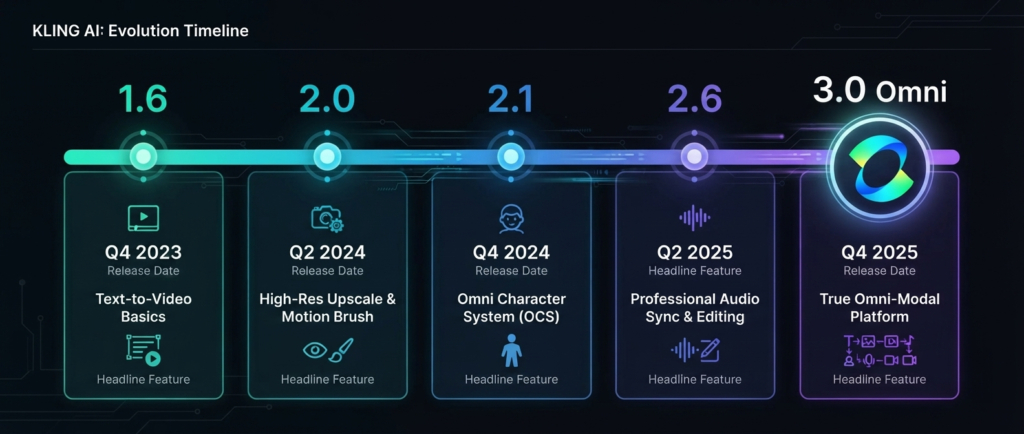
Kling AI is a text-to-video and image-to-video generator built by Kuaishou, the Chinese short-video company behind the Kuaiying editing app. Kuaishou launched the first version in June 2024, initially for public testing inside Kuaiying, followed by Kling 1.6 in December 2024, Kling 2.0 in April 2025, and Kling 2.1 in May 2025. Wikipedia
Technically, it runs on a diffusion-based transformer architecture paired with Kuaishou’s own 3D variational autoencoder network. In plain terms, the model reasons about space and time together rather than stitching frames, which is why Kling clips tend to hold their shape during camera movement instead of melting. Wikipedia
Adoption has been enormous. One industry breakdown reports more than 60 million creators generating over 600 million videos, with Kling reaching roughly $240 million in annual revenue by the end of 2025. AI Video Bootcamp
The version history matters when you’re budgeting:
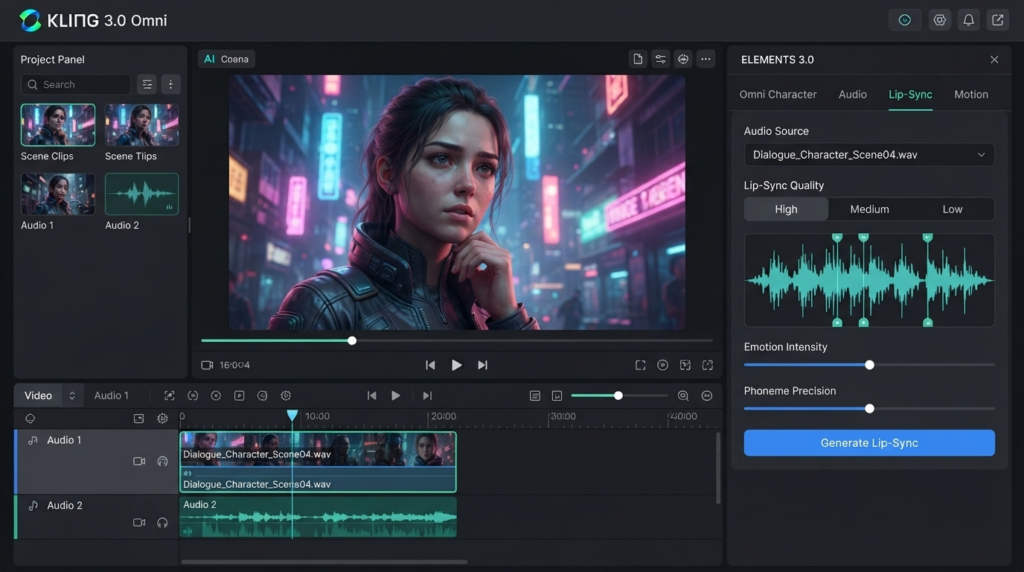
- Kling 2.6 (December 2025) — the first Kling model to generate synchronized audio and video in a single pass, at up to 1080p and 48 fps with a 10-second cap. Overchat
- Kling 3.0 Omni (February 2026) — the current flagship. It launched on February 5, 2026 with native audio, 4K output, and generation up to 15 seconds, and a June 17, 2026 upgrade extended the editing pipeline to 4K input and output with a 3-to-15-second range. Atlascloud
Older models stay live because they’re cheaper. A quick social clip rarely needs the top engine, and lighter versions generate faster. For a five-second B-roll shot, running the flagship is a waste of credits. Atlas Cloud
→ Official site: kling.ai | Model documentation: Kling VIDEO 3.0 Omni guide
Standout Features
Cinematic length and multi-shot control
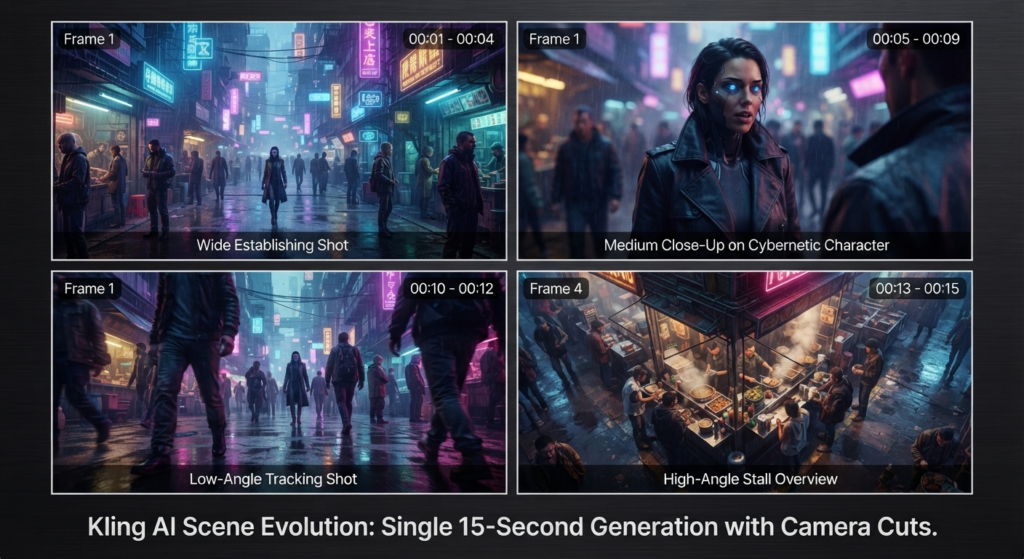
The 15-second ceiling sounds small until you see what fills it. Kling 3.0 Omni generates 15-second clips at native 4K/60fps with up to six camera cuts in a single generation — meaning the model handles shot planning and transitions itself instead of you chaining clips in an editor. With AI Director and multi-shot storyboards, that removes a chunk of manual cutting, which helps most on dialogue and action scenes that need a clear beginning, middle, and resolution. APIMartAPIMart
Character consistency
Morphing faces are the reason most AI ads never ship. Kling attacks this with reference material rather than prompt wrangling. The Elements feature lets you combine up to four reference images to hold a character steady across scenes, and first/last frame control chains clips into longer continuous sequences. On the newer model, the strongest results come from feeding Elements 3.0 a 3-to-8-second video clip of your character, which locks facial dynamics, body movement, vocal tone, and appearance together. OverchatAPIMart
Native audio and lip-sync
This was the 2.6 breakthrough and it’s still the headline feature. Kling generates the video and its audio in one pass — before this you produced a silent clip and added voiceover or sound effects separately in another tool. It covers sound effects, human voices, and musical scores matched to the visuals. AI Video BootcampMedium
The catch is financial. Audio roughly doubles credit consumption compared to a standard silent generation. AI Video Bootcamp
Motion and rendering quality
Motion control spans reference-video workflows, a motion brush, and first/last frame positioning. Independent testing puts Kling ahead of Sora 2 on audio reliability and global availability, though behind Veo 3.1 on resolution at the time of that review — the availability point matters if you’re outside the US, where Western tools have historically gated access. OverchatOverchat
Kling AI Pricing in 2026
Here’s the thing nobody tells beginners: the sticker price is almost meaningless. Kling runs on credits, and credits burn at different rates depending on model, resolution, and whether audio is on.
The credit math first
Kling 3.0 costs between 6 credits per second at 720p without audio and 12 credits per second at 1080p with native audio. A realistic 10-second 1080p clip, allowing for three attempts, runs around 360 credits. Voiceoverstudioai
Read that again. One finished ten-second clip can cost more than half an entry-level monthly allowance.
The tiers
| Plan | Price (monthly) | Credits | Watermark | Commercial rights |
|---|---|---|---|---|
| Basic (Free) | $0 | ~66 daily | Yes | No |
| Standard | ~$6.99 first month, ~$8.80 renewal | 660/mo | No | Yes |
| Pro | ~$25.99–$37 | ~3,000/mo | No | Yes |
| Premier | ~$64.99–$92 | ~8,000/mo | No | Yes |
| Ultra | ~$128–$180 | 26,000/mo | No | Yes |
On September 13, 2026, Kling’s official plan guide listed Standard at $6.99 for the first month, then $8.80 per month with 660 monthly credits, with annual Standard at $79.20 paid upfront. The first-month price is a new-subscriber discount across every tier — Standard $6.99, Pro $25.99, Premier $64.99, Ultra $127.99 — after which plans renew higher. Prices also differ between the website and the iOS app, so check the membership page in your own account before paying. Magic HourFello AI
Annual billing saves about 34% on Standard, Pro, and Premier, but Ultra has no annual option. And a warning worth knowing: Ultra launched at $128/month in August 2025 and reached $180/month by January 2026 — a 41% rise in about six months. Eesel AIEesel AI
→ Verify current rates: Kling AI membership page
Commercial rights
This is the single most important line for any business reader. The free tier caps resolution at 360p–540p, cannot remove watermarks, and carries no commercial usage rights. Standard is the lowest plan that removes the watermark and permits commercial use. eeselatlascloud
If you’re making content for a client, a product page, or a monetized channel, the free tier is legally off the table. Budget for Standard minimum.
Kling vs. Sora vs. Runway
Kling AI vs. OpenAI Sora — the comparison ended
There is no polite way to say this: Sora is gone. OpenAI discontinued the Sora web and app experiences on April 26, 2026, and the Sora API will be discontinued on September 24, 2026. The announcement came on March 24, 2026, and marks the end of the Sora brand entirely. OpenAI Help CenterWikipedia
Why it collapsed is instructive. Sora’s app rose to the top of Apple’s App Store and reached a million downloads faster than ChatGPT, but downloads had fallen 45% by January, and OpenAI redirected the Sora research team toward world-simulation research tied to robotics. The shutdown also ended a $1 billion Disney partnership that would have licensed Disney characters into Sora. One analysis attributes the decision to economics: roughly $1 million per day in operating cost against about $2.1 million in total revenue. OpenAI to discontinue Sora video app +2
For the record, API pricing before the shutdown was $0.10 per second for sora-2 and $0.30 to $0.70 per second for sora-2-pro depending on resolution — three to seven times Kling’s effective rate, for a product with no consumer front end. Glbgpt
The practical lesson isn’t “Kling beats Sora.” It’s that platform risk is real. Keep your scripts, reference images, and source assets portable, and don’t build a content pipeline that only one vendor can run.
→ Official notice: What to know about the Sora discontinuation (OpenAI Help Center)
Kling AI vs. Runway Gen-4.5
Runway is now the serious comparison. Its flagship Gen-4.5 holds the top position on the Artificial Analysis text-to-video benchmark, and Runway’s tools are used in production at Netflix, with partnerships including NVIDIA and Lionsgate. Eesel AI
Where Runway wins is workflow. It isn’t one model; it’s a studio. Gen-4.5 generates between 2 and 10 seconds of video at 12 credits per second, paid plans start at $15 per month ($12 annually) for 625 credits, and Runway now hosts third-party models including Google Veo 3.1 and ByteDance Seedance inside the same credit system. That library also includes Kling 3.0 itself, alongside 30+ tools covering video-to-video, lip sync, green screen, upscaling, and generative audio — with a genuinely complex interface. AI WeeklyVidMuse
Where Kling wins is cost per finished second and raw realism on human subjects. Runway’s Standard tier buys roughly 52 seconds of Gen-4.5 per month, Pro about 187 seconds at $28, and Max about 791 seconds at $76. Fifty-two seconds a month is not a content business. Eesel AI
If you’re specifically building ad creative rather than general video, our breakdown of the best AI video generators for product ads in 2026 compares Kling against HeyGen, Creatify, Synthesia, and Veo 3 on that narrower job.
Quick comparison table
| Kling AI (3.0 Omni) | OpenAI Sora 2 | Runway (Gen-4.5) | |
|---|---|---|---|
| Status | Active, shipping | Discontinued Sept 24, 2026 | Active |
| Max clip length | 15 seconds | 16–20s (API) | 2–10 seconds |
| Max resolution | Native 4K / 60fps | 1080p (Pro) | 1080p tiers |
| Native audio | Yes | Yes | Via separate tools |
| Entry paid price | ~$6.99 first month | N/A | $12–15/month |
| Free tier | Daily credits, watermarked, no commercial use | None | 125 one-time credits |
| Third-party models | No | No | Yes (Veo, Kling, Seedance) |
| Best for | Cost-efficient realistic clips with sound | — | Full production workflows |
Pros and Cons
Pros
- Native 4K at 15 seconds with built-in audio — a genuine one-pass ad or product clip.
- Strong character locking via Elements and video references.
- Cheapest entry into commercially licensed AI video among the major players.
- Available globally, with a permanent free tier for testing prompts.
- Older models stay available at lower credit cost for simple jobs.
Cons
- Credits disappear fast, especially with audio enabled.
- First-month pricing masks the real renewal rate on every tier.
- Free tier is unusable for business — watermark plus no commercial rights.
- Lip-syncing can still be inconsistent in complex dialogue scenes, and long-form work means chaining clips. Medium
- Learning curve on Elements, motion brush, and frame controls.
Final Verdict: Is Kling AI Worth It in 2026?
Yes — for most small businesses and creators, Kling is now the default choice. Not because it wins every benchmark, but because it’s the best ratio of realism to cost in a category where your competitor’s tool just got switched off.
Choose Kling if you make short-form ads, product demos, or social clips and care about cost per usable second. Start on Standard, track a month of real credit consumption, then upgrade on data instead of guesswork.
Choose Runway if video is your actual job — you need editing, upscaling, lip sync, and multiple models in one workspace, and you’d rather pay more per second than assemble a toolchain.
If your use case is talking-head or avatar-led content rather than cinematic B-roll, compare against Higgsfield AI before committing a budget.
Don’t choose Sora. You can’t.
Have you tested Kling 3.0 against Runway on the same prompt? Drop your results in the comments — we’re collecting side-by-side tests for a follow-up piece.
Frequently Asked Questions
Is Kling AI better than Runway Gen-4.5?
Better on cost and human realism; worse on workflow. Runway Gen-4.5 currently leads the Artificial Analysis text-to-video benchmark, but Runway’s entry plan buys only about 52 seconds of it per month. Kling gives you more finished seconds for less. If you need one strong clip, either works. If you need thirty clips a month, Kling’s economics win. (Note: Gen-3 Alpha is a retired model — Gen-4.5 is current.) Eesel AIEesel AI
How does Kling AI pricing work for beginners?
You buy credits, not videos. Kling 3.0 charges 6 to 12 credits per second depending on resolution and audio, so a 10-second 1080p clip with a couple of retries can approach 360 credits. Start on Standard’s 660 monthly credits, generate at 720p without audio while you learn prompting, and only switch to high settings for final renders. Voiceoverstudioai
Can I use Kling AI videos for commercial YouTube channels or ads?
Only on a paid plan. Free-tier output is watermarked and strictly prohibited from commercial use, while Standard and above remove the watermark and grant full commercial rights. Also keep platform disclosure rules in mind — YouTube and Meta both require labeling realistic synthetic media. atlascloud
How long are the videos you can generate on Kling AI?
Up to 15 seconds in one generation on Kling 3.0, versus 10 seconds on the previous model. Longer pieces are built by chaining clips using first/last frame control, then editing them together. APIMart
Does Kling AI support text-to-speech and sound effects automatically?
Yes. Kling generates sound effects, human voices, and musical scores matched to the visuals through a synchronous video-audio architecture. Budget for it — audio roughly doubles credit cost per generation. MediumAI Video Bootcamp
Pricing verified September 2026. Kling shows list, first-time, and renewal prices on the same card and has changed tiers more than once this year — confirm on the official membership page before subscribing.