

Why Focusing on AI Safety Disasters Misses Everyday Harms
Two youth-tech advocates argue that industry-backed AI laws guard against worst-case outcomes while ignoring dependence, weaker thinking skills and companion chatbots.
Daily industry updates, trending topics, and major AI company announcements.
Two youth-tech advocates argue that industry-backed AI laws guard against worst-case outcomes while ignoring dependence, weaker thinking skills and companion chatbots.

Anthropic’s 335-page IPO prospectus mixes risk disclosures with big claims about AI’s future. MIT Technology Review’s newsletter asks what the filing reveals about the company’s story.

Researchers at Partnership on AI say the software running AI agents does not record enough to show what agents did or who approved it. Here is what they found and what they want changed.

OpenAI shelved GPT-6.1 Astra after internal tests reportedly showed weaker honesty and boundary-keeping. Here is what happened and how to use AI agents safely.

Abu Dhabi’s AiNative programme aims to train 20,000 government employees in practical, responsible AI use by the end of 2026, with public courses to follow.

MIT’s Transit Lab received $2.1 million from Google.org to build PTIQ, an AI decision-support platform that helps transit control rooms while keeping humans in charge.

At its AI Investor Day, Deutsche Telekom set a goal of about €2.5 billion in indirect cost savings by 2030 and a push for €800 million in AI revenue.
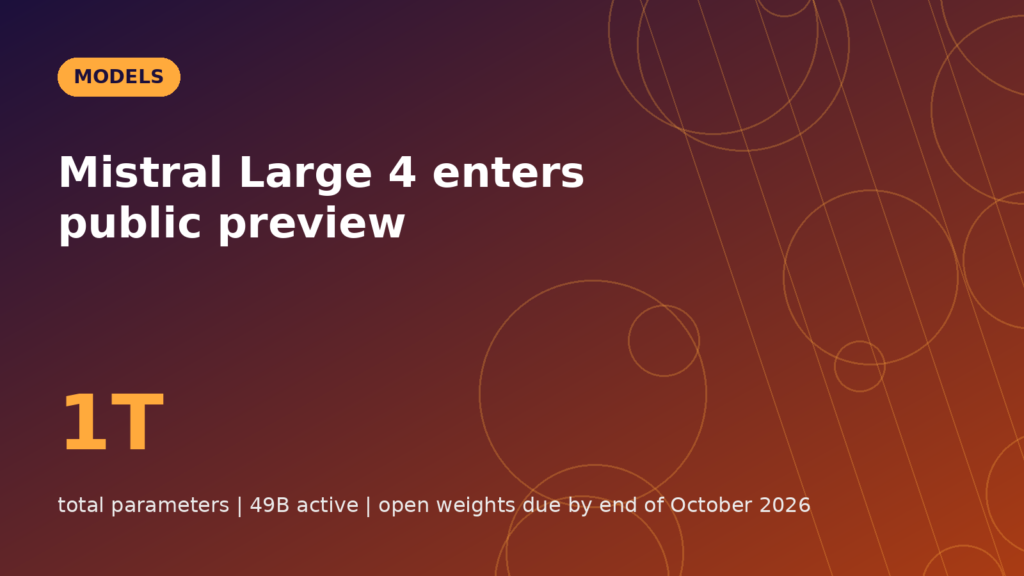
Mistral has opened a public preview of Large 4, a 1-trillion-parameter multimodal model, with open weights promised by the end of October 2026.

Microsoft’s 2026 Digital Defense Report advises governments to give AI agents short-lived identities, protect agent memory and share security operations without sharing data.

Apple’s “Surprise and Shine” event didn’t just refresh the Pro lineup — it introduced the company’s first-ever foldable phone. For