
GPT-6 Astra vs. GPT-5.6 : OpenAI just pushed GPT-6 Astra out the door on September 3, calling it a “generational leap.” I’ve spent the last few days running it against GPT-5.6 Sol on the kind of work I actually do — content workflows, research, code fixes for this site, and the tedious multi-step busywork that eats up half my week. Here’s the honest version, not the press-release version.
Key Takeaways
- Astra is genuinely faster at multi-step, agentic work — think research-then-write-then-format tasks, not single-shot questions.
- The price jumped: Astra runs $10 input / $50 output per million tokens, versus $5 / $30 for Sol. Nearly double.
- Astra is noticeably better at staying inside task boundaries — it wanders off-task less than Sol did on long sessions.
- Access is uneven at launch — cybersecurity partners and Pro/Business/Enterprise users got it first; free-tier access is still rolling out.
- For most small business content workflows, the upgrade is nice-to-have, not must-have — Sol still handles 80% of what I throw at it.
Table of Contents
GPT-6 Astra vs GPT-5.6: Quick Comparison
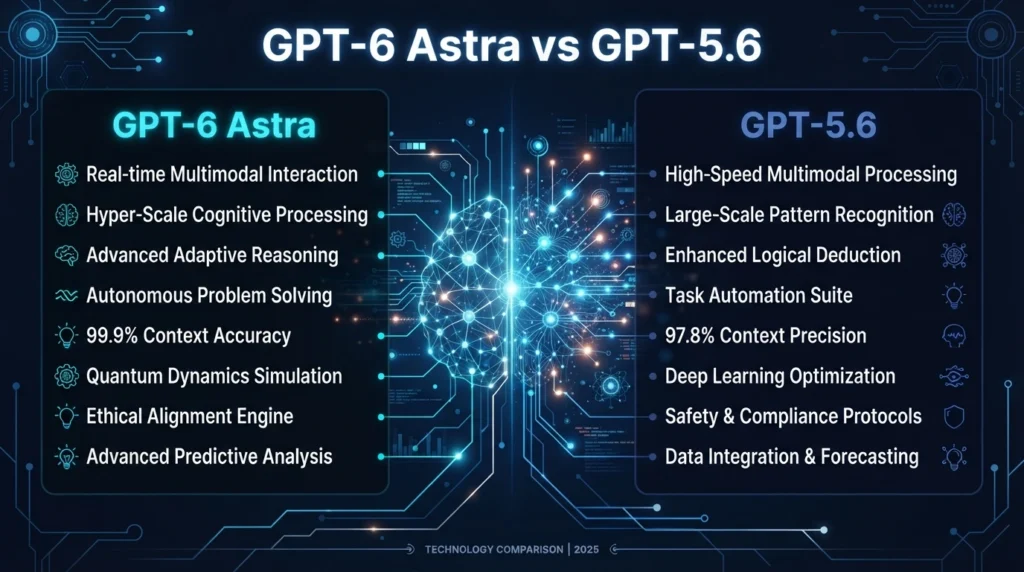
| GPT-6 Astra | GPT-5.6 Sol | |
|---|---|---|
| Released | September 3, 2026 | July 9, 2026 |
| Input price (per 1M tokens) | $10.00 | $5.00 |
| Output price (per 1M tokens) | $50.00 | $30.00 |
| Computer-use (OSWorld 2.0) | 72.6%, ~47% faster per task | Slower baseline |
| Agentic coding (DeepSWE 1.1) | 74.1% | 72.7% |
| Cybersecurity capability tier | Critical (highest tier) | Below Critical |
| Prompt injection resistance | Significantly improved | Baseline |
| Access | Phased — cybersecurity partners first, then Plus/Pro/Business/Enterprise | Fully rolled out on all paid tiers |
My Hands-On Experience
Where Astra actually earns its price tag
The clearest win is on tasks with a lot of moving parts — the kind where the model has to hold context across several steps without me babysitting it. I ran a workflow that pulled competitor pricing, cross-referenced it against my own site’s numbers, and drafted a comparison table. Sol needed two rounds of correction to stay on the actual task instead of drifting into tangents. Astra got it in one pass and noticeably faster.
OpenAI’s own safety materials back this up — the company says Astra is significantly more resistant to prompt injection and holds task boundaries more consistently in browsing and workplace contexts, which lines up with what I saw when feeding it messier, real-world inputs instead of clean prompts.
Where I didn’t notice a difference
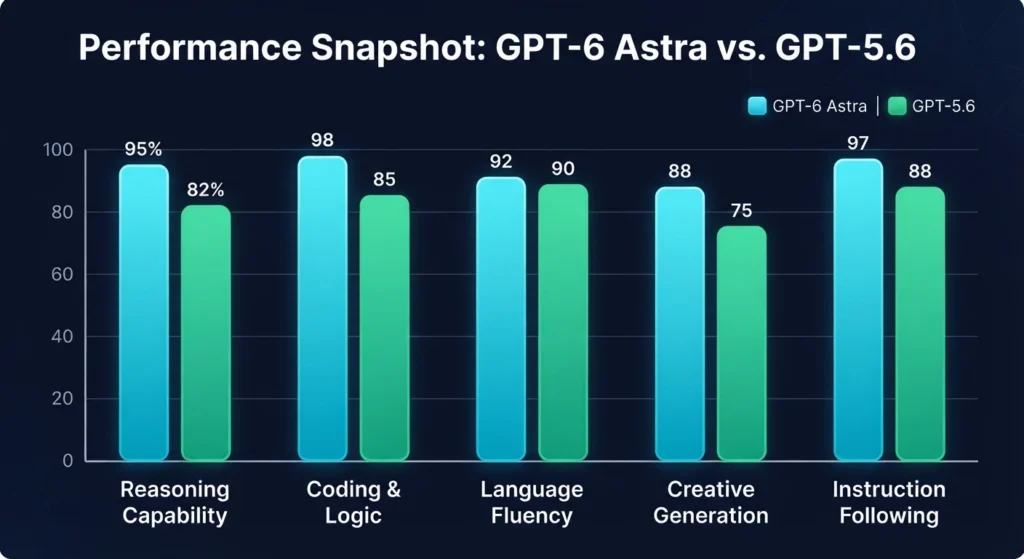
For straightforward writing — drafting a blog intro, rewriting a meta description, summarizing an article — I couldn’t tell the two apart blind. If your workload is mostly single-shot content generation rather than long agentic chains, you’re paying almost double for a gain you probably won’t feel day to day.
The price problem
Astra costs $10 per million input tokens and $50 per million output tokens, against Sol’s $5 and $30. For a small operation running dozens of articles a month through an API pipeline, that’s a real line-item increase, not a rounding error. I’d only justify it for the specific workflows where Astra’s agentic edge actually shows up.
Pros and Cons
GPT-6 Astra
Pros:
- Faster and more reliable on long, multi-step agentic tasks
- Better at staying within task boundaries and resisting prompt injection
- Strong jump in coding and computer-use benchmarks
Cons:
- Nearly double the API cost of Sol
- Phased rollout means not everyone has access yet
- Overkill for simple single-turn content tasks
GPT-5.6 Sol
Pros:
- Half the price, still very capable
- Fully available across every paid tier
- Handles most everyday content and research tasks just fine
Cons:
- More prone to drifting off-task on long, complex workflows
- Weaker prompt injection resistance
- Starting to feel like the “budget” option now that Astra exists
Should You Use GPT-6 Astra?
If your work is mostly agentic — multi-step research, coding, or workflows where the model has to stay on track without supervision — Astra is worth testing, even at the higher price. If you’re running a content site, drafting posts, or doing single-shot tasks like I do most days, stick with Sol and save the budget. I’m keeping both in rotation: Sol for daily content work, Astra for the handful of workflows where accuracy over many steps actually matters.
FAQ: GPT-6 Astra vs GPT-5.6
Is GPT-6 Astra worth the price increase over GPT-5.6?
Only if your workload involves long, multi-step agentic tasks. For single-shot content generation, most users won’t notice enough difference to justify the near-2x cost.
Is GPT-6 Astra available to everyone yet?
Not fully. Cybersecurity program partners and Plus, Pro, Business, and Enterprise users got access first, with a broader rollout following in phases.
Does GPT-6 Astra replace GPT-5.6 Sol?
Not immediately. OpenAI hasn’t discontinued Sol, and for many everyday tasks it remains the more cost-effective choice.
What’s the biggest real-world difference between GPT-6 Astra and GPT-5.6?
Task persistence. Astra stays on-task through longer, messier workflows more reliably than Sol did.
External Sources
These figures and quotes are drawn from OpenAI’s own launch announcement and safety overview for GPT-6 Astra, along with independent benchmark reporting from DataCamp and rollout coverage from CNBC.
Related Reading
For a deeper technical breakdown of the model, see our full write-up, Unstoppable GPT-6 Astra Explained: Features, Benchmarks. If you’re newer to this space, What Is an AI Model? How AI Models Work (Beginner’s 2026) is a good starting point.